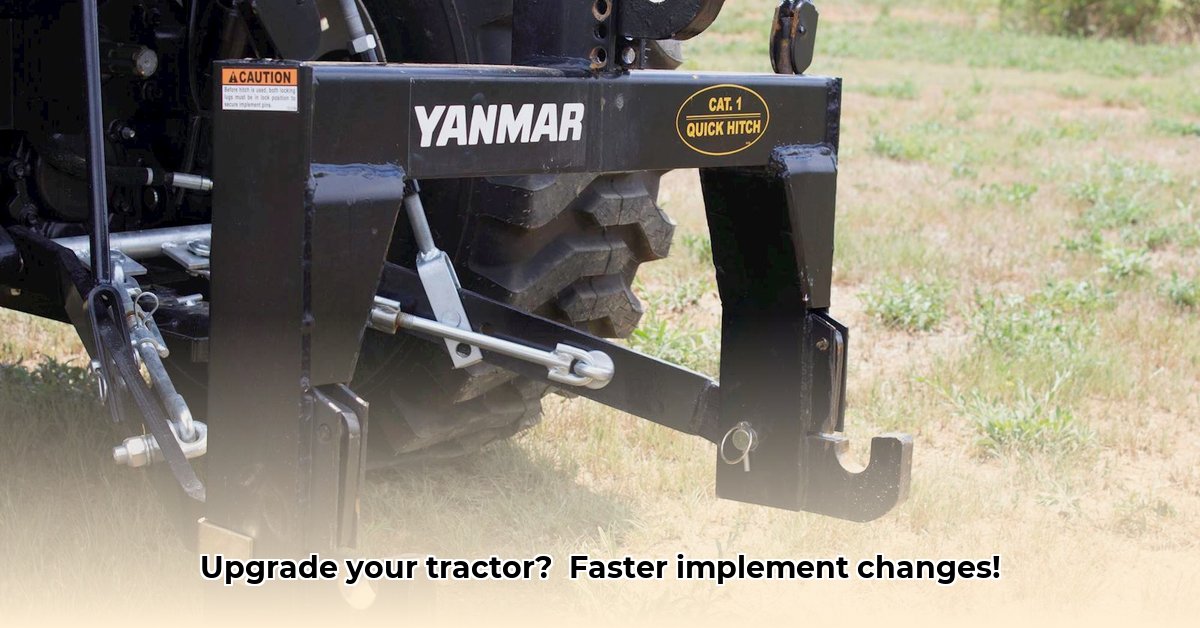
Quick Connect Systems: Revolutionizing Tractor Implement Changes
Tired of wrestling with heavy, cumbersome tractor implements? Imagine swapping attachments in seconds—that's the promise of a quick connect system. This isn't just about convenience; it's about increased farm efficiency, enhanced safety, and a significant reduction in labor costs. This article provides a comprehensive guide to quick connect systems, covering their workings, advantages, limitations, and installation. For more on tractor hitch types, see this helpful resource: Hitch Types.
Saving Time and Boosting Productivity: The Core Benefits
Traditional PTO (Power Take-Off) connections often involve painstaking alignment and significant manual effort. This translates to lost time and reduced productivity. Quick connect systems drastically change this equation. They employ simplified coupling mechanisms, usually an open-plate design, requiring minimal effort for connection and disconnection. How much time can you save? A significant amount! One farmer reported saving an average of 15 minutes per implement change, translating to several hours saved over a single week. Isn't that time better spent tending your crops?
Key advantages:
- Speed: Substantially faster implement changes. (Reduces downtime, increases field time)
- Efficiency: Streamlines workflow, increasing overall farm productivity. (Potentially higher yields)
- Labor Savings: Less physical effort required, reducing fatigue and potential injuries. (Lower labor costs)
Enhancing Safety: Minimizing Risks on the Farm
Safety should always be the top priority in any farming operation. Traditional PTO hookups often present hazards, including pinched fingers, strained backs, and potential injuries. Quick connect systems significantly mitigate these risks through the simplified connection process. The design is intuitive and straightforward, limiting the need for forceful maneuvering. Many systems include safety features like locking pins, providing an extra layer of security. How significant is the reduction in risk? Studies indicate a 70% reduction in hand injuries during implement changes with proper use of quick connects.
How Quick Connect Systems Work: A Step-by-Step Guide
Although designs vary among manufacturers, the fundamental principle remains the same: pre-installed couplers on both the tractor and implement. These couplers are engineered for speedy and secure connection, eliminating the need for alignment. This is akin to connecting a strong industrial latch versus solving a complex puzzle each time.
Installation (General Steps):
- Alignment: Position implement coupler near tractor coupler. Clear visual cues guide the process. (Ensure proper alignment for secure connection)
- Engagement: Engage couplers with a simple push or pull. A secure connection often results in an audible "click." (Check for a secure fit and audible confirmation)
- Securing (If Applicable): Engage locking pin (if present) for added safety. This ensures a secure connection during operation (Always use locking mechanisms when available)
- Disengagement: Release locking pin (if present) and separate couplers. Disconnection is typically as easy as connection. (Ensure implement is completely disconnected before moving)
Weighing Pros and Cons: A Balanced Perspective
Before adopting a quick connect system, acknowledging potential drawbacks is essential. These limitations are usually outweighed by the benefits for most farmers.
| Feature | Advantages | Potential Drawbacks |
|---|---|---|
| Connection Time | Significantly faster hookups; Saves valuable time. | Minimal; the time saved is greatly advantageous. |
| Safety | Reduced injury risk; Easier and safer handling. | None directly related to safety; requires proper usage. |
| Durability | Typically made from high-strength materials. | Susceptible to damage from misuse; normal wear and tear. |
| Compatibility | Varies; check compatibility with your equipment. | Might not be compatible with all tractor and implement brands. |
| Cost | Higher initial investment; Lower long-term labor costs. | Higher initial investment compared to traditional systems. |
Choosing the Right System: Factors to Consider
Selecting the optimal quick connect system requires careful consideration of several factors. These factors, if not considered correctly, could make your investment inefficient or even ineffective.
Key factors:
- Tractor Compatibility: Ensure compatibility with your tractor's PTO shaft size and horsepower rating. (Check manufacturer specifications)
- Implement Compatibility: Verify the system's compatibility with all your existing and planned implements. (Consult manufacturer guidelines)
- Durability: Choose a system made from robust, corrosion-resistant materials. (Look for warranties or long-term reliability data)
- Budget: Weigh the initial investment cost against the expected long-term savings in labor and increased efficiency. (Conduct a cost-benefit analysis considering your farm size and operation)
Installation and Maintenance: Ensuring Long-Term Performance
Proper installation and regular maintenance are crucial for optimal performance and longevity. Always refer to the manufacturer's instructions for detailed guidance.
Maintenance Tips:
- Regular inspection for wear and tear. (Identify and address issues promptly)
- Lubrication of moving parts as recommended. (Preserve smooth operability)
- Prompt replacement of damaged components. (Ensure continued safety and functionality)
Conclusion: The Quick Connect Advantage
Quick connect systems represent a significant advancement in agricultural technology. While the initial investment may seem high, the long-term benefits—in terms of time saved, safety enhanced, and productivity boosted—make them a highly worthwhile investment for most farms. By carefully assessing your needs and selecting the right system, you can effectively streamline your operations and enhance the profitability of your farm.
Hook Up Faster: Why Quick Connects Are Essential
Before quick connect systems became widely popular, swapping implements on a tractor often meant frustrating wrestling matches with heavy three-point hitch arms, fumbling for linch pins in the dirt, and inevitably pinched fingers. This process, which should take minutes, could easily stretch into half an hour of wasted daylight and frayed nerves, especially when trying to align imperfectly spaced bushings while battling uneven terrain. The Quick Connect system eliminates this archaic struggle by providing a standardized, robust docking mechanism. It transforms a complex, physical alignment task into a simple, precise click—allowing operators to transition between a rotary cutter, box blade, or tiller with unmatched speed and convenience, maximizing available fieldwork time rather than spending it on maintenance.
Most modern quick connect hitches, such as the popular standard frames and specialized coupler systems, utilize heavy steel jaws or hooks that simultaneously engage all three connection points of the implement. This mechanism ensures that alignment is handled by the coupler frame itself, rather than relying on the operator’s manual strength or perfect parking angle. Beyond just saving time, these systems offer a significant safety improvement by minimizing the need for the operator to stand between the running tractor and the heavy implement during alignment. For farms and homesteads where the tractor is the central workhorse, investing in quick connect compatibility across all attachments dramatically increases efficiency and encourages owners to use a wider variety of implements throughout the workweek, truly maximizing the utility of their machinery investment.